

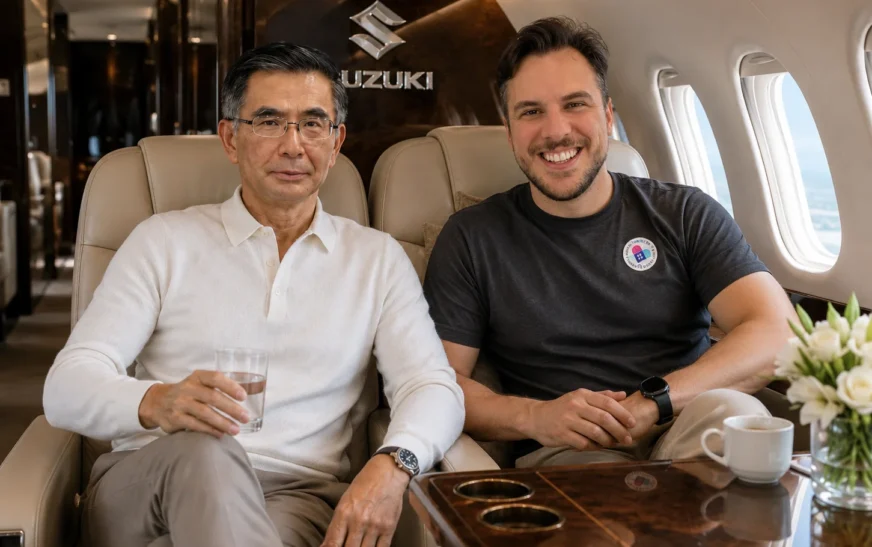
Mike Krieger and Toshihiro Suzuki are two professionals from very different industries. Krieger is best known for his work in software, social media, and artificial intelligence. Suzuki is known for his leadership in the automotive industry through Suzuki Motor Corporation. Their careers developed along separate paths, yet both show how technology, product thinking, and leadership can shape successful organizations. For people searching for Mike Krieger and Toshihiro Suzuki, the main question is often whether the two have a direct professional connection. Available information does not establish a major partnership between them. Instead, their careers offer an interesting comparison between digital products and global automotive business.
Understanding Mike Krieger and Toshihiro Suzuki requires looking at their professional backgrounds separately. Krieger became widely recognized as an Instagram co-founder and software engineer. Later, he worked on other digital products and moved into artificial intelligence leadership. Suzuki followed a more traditional corporate path, working across product planning, marketing, operations, and management. He eventually became a leading executive at Suzuki Motor Corporation. Their experiences therefore represent different forms of modern leadership. One focuses mainly on software and internet products, while the other focuses on vehicles and international manufacturing. Comparing them can help readers understand how different industries approach innovation, products, customers, and long-term business growth.
Who Is Toshihiro Suzuki? A brief biography
| Biography Detail | Toshihiro Suzuki |
|---|---|
| Full Name | Toshihiro Suzuki |
| Date of Birth | September 28, 1959 |
| Age | 66 years (2026) |
| Birthplace | Gifu, Japan |
| Nationality | Japanese |
| Education | Keio University |
| Field | Business and Automotive Industry |
| Known For | Leadership at Suzuki Motor Corporation |
| Company | Suzuki Motor Corporation |
| Position | Former President and Representative Director |
| Father | Osamu Suzuki |
| Industry | Automotive |
| Career Start | Suzuki Motor Corporation |
| Languages | Japanese |
| Residence | Japan |
Who Is Mike Krieger?
Mike Krieger is a Brazilian-American entrepreneur and software engineer who became famous through Instagram. He co-founded Instagram with Kevin Systrom, helping develop the technical foundation behind the photo-sharing service. Instagram grew rapidly after its launch and became one of the world’s most recognizable social platforms. Krieger’s role involved engineering, product development, and building technology that could support a growing global audience. His career demonstrates how software engineering can influence consumer products at enormous scale. He later became involved with other technology ventures, showing that his professional interests extend beyond social media and include broader digital product development.
After leaving Instagram, Krieger continued exploring new technology opportunities. He co-founded Artifact, a personalized news application designed around machine learning and content discovery. Artifact later became part of Yahoo, while Krieger moved toward another major area of technology. He joined Anthropic as Chief Product Officer, working on artificial intelligence products and user experiences. This progression shows a consistent focus on building products that connect complex technology with everyday users. For anyone researching Mike Krieger and Toshihiro Suzuki, Krieger’s career is a useful example of software-led innovation, where engineering, product design, artificial intelligence, and user needs work together to create digital experiences. Read More : Adrian CryptoProNetwork: A Simple Guide
Who Is Toshihiro Suzuki?
Toshihiro Suzuki is a Japanese business executive associated with Suzuki Motor Corporation. He joined the company in 1994 and developed experience across several important areas of the business. His career included product planning, corporate planning, global marketing, and motorcycle operations. He later moved into senior management and became president of Suzuki Motor Corporation in 2015. His background differs greatly from Krieger’s software-focused career. Suzuki’s work has centered on vehicles, manufacturing, international markets, product strategy, and corporate leadership. This makes him an important example of how executives can build expertise across multiple functions before taking responsibility for a global company.
Suzuki’s leadership career also reflects the complexity of the automotive industry. Vehicle companies must manage product development, manufacturing, supply chains, customer expectations, regulations, and international markets. These responsibilities require long-term planning and strong organizational coordination. Suzuki’s experience across different business functions helped prepare him for senior leadership responsibilities. When comparing Mike Krieger and Toshihiro Suzuki, this difference becomes especially clear. Krieger worked mainly with fast-moving digital products, while Suzuki worked within an industry where products require large investments and longer development cycles. Both environments demand innovation, but the practical challenges and business models are significantly different.
Mike Krieger and Toshihiro Suzuki: Career Comparison
The careers of Mike Krieger and Toshihiro Suzuki demonstrate two distinct paths toward professional influence. Krieger developed his reputation through software engineering, entrepreneurship, consumer technology, and product leadership. Suzuki built his career through corporate management, automotive products, marketing, and international business. Krieger’s work has often involved digital platforms that can change rapidly. Suzuki’s work has involved physical products that require extensive manufacturing and distribution networks. These differences do not make one career more important than the other. Instead, they show how leadership skills can operate across very different industries while still focusing on customers, products, innovation, and organizational performance.
Another useful comparison involves the pace of change. Software companies can release updates quickly and respond rapidly to user behavior. Automotive companies usually work with longer product cycles because vehicles require engineering, testing, manufacturing, safety checks, and global distribution. Krieger’s experience therefore highlights speed, experimentation, and digital scalability. Suzuki’s career highlights planning, operational discipline, manufacturing expertise, and international coordination. Anyone researching Mike Krieger and Toshihiro Suzuki should keep these differences in mind. Their achievements should be judged within their respective industries rather than through a simple comparison of titles, companies, or public visibility.
Their Approach to Innovation
Innovation means different things in different industries. For Krieger, innovation has often involved software, product design, artificial intelligence, and better digital experiences. Instagram showed how a simple social product could become a global platform when technology and user behavior aligned. Artifact later explored personalized content discovery through machine learning. His work at Anthropic places him within the growing field of AI product development. These experiences show an interest in making advanced technology useful to ordinary users. The focus is not only on technical capability but also on creating products that people can understand, use, and return to regularly.
Suzuki’s approach to innovation is connected more closely with vehicles, mobility, manufacturing, and global customer needs. Automotive innovation can involve fuel efficiency, safety, design, production methods, connectivity, and changing transportation preferences. It also requires careful consideration of cost and reliability because customers expect physical products to perform consistently for years. This creates an interesting contrast when studying Mike Krieger and Toshihiro Suzuki. Krieger represents a software environment where products can evolve quickly. Suzuki represents an industrial environment where innovation must work at scale and survive demanding real-world conditions. Both approaches depend on understanding customers and turning ideas into practical products.

Leadership Lessons From Their Careers
One leadership lesson from Krieger’s career is the value of combining technical knowledge with product thinking. A strong digital product needs more than good code. It must solve a real problem and provide an experience people understand. Krieger’s movement from engineering toward broader product leadership illustrates this shift. His later work in artificial intelligence also shows why leaders need to understand emerging technology while considering how people will use it. This is particularly useful for young professionals who want careers in technology. Technical skills can provide a foundation, but communication, product judgment, teamwork, and customer understanding can become equally important over time.
Suzuki’s career offers another lesson: broad business experience can prepare leaders for larger responsibilities. His work across planning, marketing, and other areas gave him exposure to different parts of a major organization. Automotive leadership requires decisions that connect products with manufacturing, markets, employees, and long-term strategy. That perspective differs from the startup environment associated with Krieger. However, both careers show that leadership develops through practical experience. The comparison between Mike Krieger and Toshihiro Suzuki therefore goes beyond their job titles. It highlights two valuable approaches: building deep technical expertise and developing broad organizational understanding.
Is There a Direct Connection?
People searching for Mike Krieger and Toshihiro Suzuki may naturally wonder whether the two have worked together. Based on the available information reviewed, there is no reliable evidence establishing a major direct partnership, shared company, or significant professional collaboration between them. Their documented careers belong mainly to different business worlds. Krieger’s work centers on Instagram, digital products, artificial intelligence, and software. Suzuki’s career centers on Suzuki Motor Corporation, automotive products, manufacturing, and corporate management. This distinction is important because search results can sometimes place unrelated names together without proving that the individuals have a meaningful relationship.
A responsible article should not invent a connection simply because two names appear in the same search query. If a website claims that Mike Krieger and Toshihiro Suzuki collaborated on a project, readers should look for the original evidence. A credible claim should normally have supporting information from the organizations, official statements, reliable reporting, or other trustworthy documentation. Without such evidence, the connection should be treated as unconfirmed. This careful approach is especially important when discussing well-known business leaders. Separating verified facts from assumptions helps readers understand both individuals more accurately and prevents misleading information from spreading online.
Why Their Stories Still Matter
The careers of Mike Krieger and Toshihiro Suzuki remain interesting because they demonstrate how innovation can take very different forms. Krieger helped build products that changed how people share and discover information online. Suzuki developed his career within a global automotive organization serving customers across international markets. Their industries may appear unrelated, but both depend on strong products, customer understanding, efficient teams, and thoughtful leadership. Studying these differences can help readers see that technology is not limited to software. Modern automobiles also depend heavily on advanced technology, while software companies require strong business operations to grow successfully.
Their stories can also provide useful lessons for students, entrepreneurs, and professionals. Krieger’s career shows the possibilities created by software engineering and digital entrepreneurship. Suzuki’s career demonstrates the value of long-term development within a large global company. Neither path guarantees success, and neither should be copied without considering individual goals. Instead, readers can take practical lessons from both. Building useful skills, understanding customers, working with talented teams, and adapting to change are valuable in almost every field. For those researching Mike Krieger and Toshihiro Suzuki, this broader perspective makes the comparison more meaningful than simply listing their job histories.
What We Can Learn From Their Different Industries
Software and automotive businesses face very different challenges, yet both depend on innovation and execution. Software products can scale quickly because digital distribution reaches many users without producing a physical item for every customer. However, competition can be intense, and user expectations change rapidly. Automotive companies face high production costs and complex supply chains, but they also build products that can remain important to customers for many years. Looking at Mike Krieger and Toshihiro Suzuki together shows why business strategy must fit the industry. A successful approach in software may not work in manufacturing, just as automotive methods cannot simply be copied into internet products.
The comparison also highlights the importance of adaptability. Digital leaders must understand emerging technologies such as artificial intelligence, while automotive leaders must respond to changing mobility needs and technological developments. Both environments require people who can recognize important trends without abandoning practical business judgment. This is why the professional journeys of Mike Krieger and Toshihiro Suzuki can be useful for readers interested in careers, innovation, or business strategy. Their paths show that there is no single definition of a technology leader. Different industries require different expertise, but strong leadership consistently depends on learning, decision-making, and a clear understanding of customers.
Frequently Asked Questions
Who is Mike Krieger?
Mike Krieger is a software engineer and entrepreneur best known as an Instagram co-founder. He later worked on Artifact and moved into artificial intelligence product leadership.
Who is Toshihiro Suzuki?
Toshihiro Suzuki is a Japanese business executive associated with Suzuki Motor Corporation. He has held senior leadership roles involving automotive products, planning, marketing, and global business.
Are Mike Krieger and Toshihiro Suzuki connected?
Available information does not establish a major direct professional partnership between them. Their careers have mainly developed in different industries and organizations.
What is Mike Krieger known for?
Mike Krieger is widely known for helping create Instagram. His later career has also included digital products, machine learning, and artificial intelligence.
What is Toshihiro Suzuki known for?
Toshihiro Suzuki is known for his leadership at Suzuki Motor Corporation and his experience across automotive planning, marketing, management, and international business.
Conclusion
Mike Krieger and Toshihiro Suzuki represent two very different paths in modern business leadership. Krieger built his reputation through software engineering, Instagram, digital products, and artificial intelligence. Suzuki developed his career through automotive products, corporate management, and international business at Suzuki Motor Corporation. Available information does not establish a major direct partnership between them, so their names should not be treated as evidence of a shared venture. Instead, comparing their careers provides useful lessons about innovation, leadership, product development, and industry differences. Readers can learn more by exploring related internal guides about technology careers, product innovation, and business leadership for broader context.